

How to Develop Your Analysis in PEAD (HALO)
A step-by-step guide to writing the Development section of your PEAD paragraphs for GCSE and A-Level.
What is this Guide for?
This guide is to help people who aren’t sure what to write about in the development part of PEAD paragraphs when answering exam questions for GCSE and A-Level. It’s highly recommended you use the PEAD method to organise your argument. PEAD stands for Point, Evidence, Analysis, and Development, and using this structure makes it much more likely that you will talk about all the things you need to for those high-level scores.
Note: Other teachers and organisations use different acronyms to describe PEAD, you might see PEAL, PEA, PEEL, or something similar. They all mean the same thing.
Our Example: Remains by Simon Armitage

To give examples of what I am talking about, I will be using an extract from the Simon Armitage poem “Remains”. The BBC have a helpful AQA revision guide with a full audio reading if you want to see more of the poem.
What are the Main Steps? (HALO)

I’ve broken down the things you need to consider in the development section into the acronym HALO (but remember that you don’t need all of them in every paragraph):
Historical context.
Author intent.
Links.
Objective.
You can find out more about each part of HALO in the detailed steps below.
Historical Context

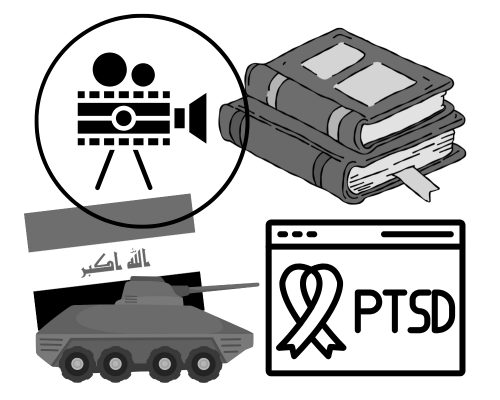
Do I Know Anything Relevant?
The most important thing to ask yourself about historical context in the development section is “Do I know any historical context that is relevant to my analysis and interpretation?” If the answer is no, don’t write anything.
What Was Happening When This Was Written?
“Remains” was written for a UK documentary called “The Not Dead” in 2007, and Armitage later added it to a book of poetry with the same name. The documentary was based around the experiences of Guardsman Tromans, who fought in the 2003 Iraq war, and was aimed at raising awareness around Post Traumatic Stress Disorder (PTSD) in the British public.
In 2007 there was little understanding of PTSD, and mental health conditions in general were usually seen as less important than physical injuries. This meant that soliders suffering PTSD were misunderstood and both the illness and treatment were stigmatised (seen very negatively by society).
Author Intent

You should always be thinking about author intent in your development sections. This is the only part of the development section that is not optional.
Do You Know or Are You Infering?
Make sure you are clear about whether this is information you know to be true (a fact) or something you are interpretting from your analysis (you worked it out and it’s pretty likely). That could look something like this:
I know - “Armitage wrote remains about a solider he interviewed who was suffering from PTSD, and he used it as part of a TV documentary raising awareness about the condition.”
I’m inferring - “It’s highly likely that Armitage was sympathetic to the suffering of soldiers with PTSD and wanted to help reduce the public stigma associated with it, as he worked on an awareness campaign in 2007.”
What If You Aren’t Sure?
You can still include inferences that you are not sure about, just make sure you are clear that this is one of many options that could be true:
I’m not sure - “It’s possible that…”, “Armitage might have wanted to…”
If It Isn’t Related to Your Analysis - Don’t include it
It can be tempting during an exam to write everything you know about a poem to desperately grab at more points, but you shouldn’t include anything that is not related to what you talked about in your analysis section.
Links


It’s always a good idea to talk about any links you see between themes, author intent, word choice, and devices, etc. Higher-level answers tend to demonstrate that they can see how ideas and techniques relate to each other.
Keep It Short
You are just dropping this info in there to show you can make connections, you don’t need to go into depth:
“This interpretation is supported by the fact that “Remains” was written as part of a PTSD public awareness campaign”.
Our Example Link: The Writing Style Fits With an Interview
The narrator, or voice, of “Remains” is in the first person (I/me), and it begins with “On another occasion”, which implies that the poem is just part of a longer list of similar events that Guardsman Tromans experienced during the Iraq war in 2003. This narrative perspective (1st-person) is a good way of encouraging empathy in the reader because it reinforces the idea that these are real experiences that happened to a real individual. Our reader is now more likely to understand more about the impact PTSD would have on somebody who has experienced a lot of traumatic events and must relive them every time they try to rest, even for a moment.
This is relevant and interesting, so I will add a very small amount of this information in my final development example later.
Objective


The “O” part of HALO is there to remind you to make sure you have completed all the objectives you were asked to before you move on to your next paragraph or question.
Have You Answered the Question?
This is a great oportunity to make sure you did what you were asked to do. Here are some examples of the kind of thing to check:
Did I answer “How”, “What”, “Do I agree”, or “To what extent do I agree” ? And, which one was I supposed to answer? - It is extremely common for students to answer the wrong question in a stressful situation. You still have a chance to change your answer slightly so it fits the correct question.
Am I still on topic? - It is easy to get lost in the analysis section and forget what you were supposed to be focussed on, so check back at the end to make sure you didn’t go off on a tangent.
Did I talk about Structure or Language? - If you answered a structure question with the linguistic analysis of quotes, now is a good time to change your answer because it will not get you any points!
Do my PEAD sections all make sense together? - Checking this might be part of your overall proofreading time at the end, but higher grades come from answers that follow a logical thread from point through to development.
Our Final Development Section
Here is our complete example development section, but remember that before this there would be sections on your point, evidence, and analysis:
“…Armitage likely combined the pairing of rest and attack with the first person account of a soldier’s traumatic war-time experiences to place the public in his position, as it was written for the PTSD awareness TV Documentary “The Not Dead” in 2007. This would help the public feel more empathy for the soldier at a time when mental illness and treatment were heavily stigmatised.”
All that is left to do now is to add all our sections together and make it as concise as we can.
Need More Help with PEAD?
If you need any support for your Point, Evidence, Analysis, or Development paragraphs that you can’t find here, there are other resources below that might help you:
PEAD: Point Section - how to write a good or a bad PEAD paragraph for GCSE and A-Level English.
PEAD: Evidence Section - a step-by-step guide to choosing and giving good quotes in context.
PEAD: Analysis Section - a step-by-step guide to analysing quotes.
PEAD: Development Section - how to develop your analysis and link to historical context.
PEAD: Putting it All Together - our final example PEAD paragraph.